Suppose that in Winter the daytime temperature in a certain office building is maintained at . The heating is shut off at 10 P.M. and turned on again at 6 A.M. On a certain day the temperature inside the building at 2 A.M was found to be . The outside temperature was at 10 P.M. and had dropped to by 6 A.M.
What was the temperature inside the building when the heat was turned on at 6 A.M.
Experiments show that the time rate of change of the temperature of a body (which conducts heat well, as, for example, a copper ball does) is proportional to the difference between and the temperature of the surrounding medium (Newton’s law of cooling).
Let be the temperature inside the building and the outside temperature (assumed to be constant in Newton’s Law). Then by Newton’s law,
| (1) |
Such experimental laws are derived under idealized assumptions that rarely hold exactly. However, even if a model seems to fit the reality only poorly (as in the present case), it will still give valuable qualitative information. To see how good a model is, the engineer will collect experimental data and compare them with the calculations from the model.
We cannot solve (1) because we do not know , just that it varied between and , so we follow the Golden Rule: If you cannot solve your problem, try to solve a simpler one.We solve (1) with the unknown function replaced by the average of the two known values, or . For physical reasons we may expect that this will give us a reasonable approximate value of at 6 A.M.
For constant (or any other constantvalue) the ODE (1) is separable. Separation, integration, and taking exponents gives the general solution
We choose 10 P.M. to be . Then the given initial condition is and yields a particular solution, call it . By substitution
We use , where is 2 A.M. Solving algebraically for and inserting into gives (see Figure LABEL:fig:temp)
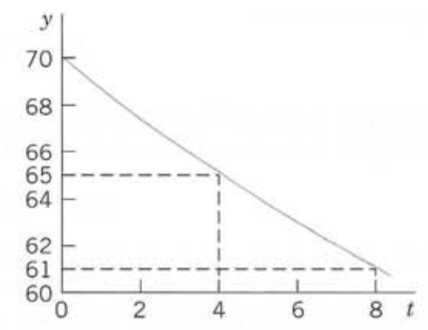 Figure 1: Particular Solution (temperature)
6 A.M. is (namely 8 hours after 10 P.M.), and
Hence the temperature in the building dropped by from to , a result that looks reasonable.